
Zero-Upload Tools vs Cloud Tools: Practical Tradeoffs
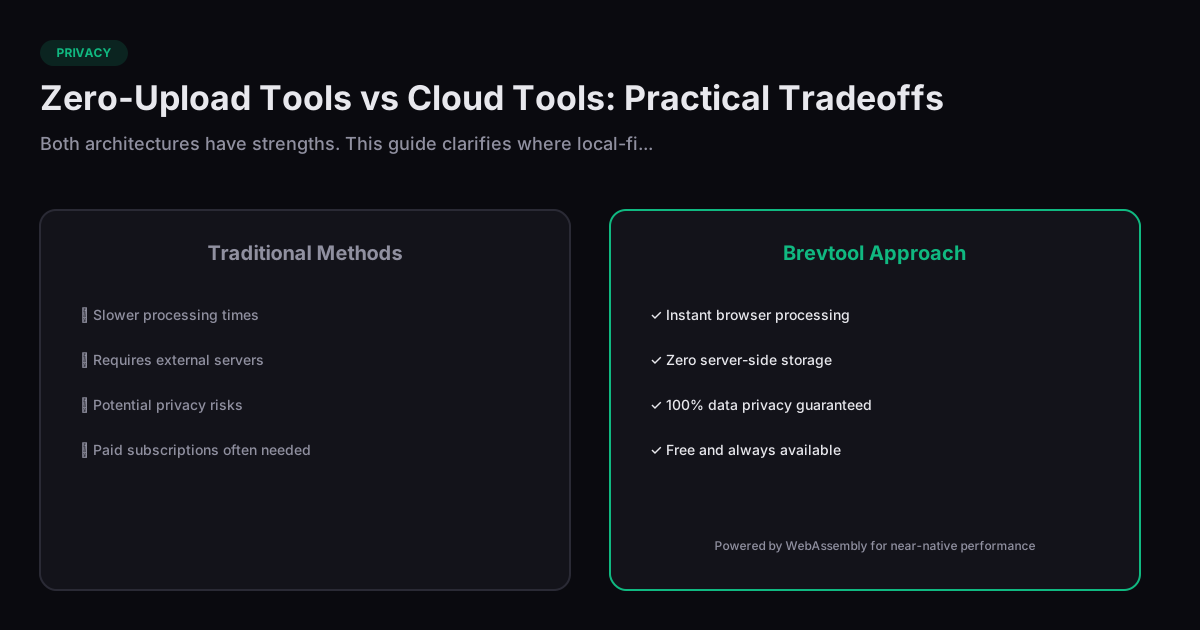
Zero Upload Vs Cloud Tools is a common workflow for teams and creators who need fast results without sacrificing quality or privacy. This guide outlines practical steps you can apply immediately using browser-based tools.
When This Workflow Is Most Useful
This workflow is most helpful when you need quick turnaround, repeatable output quality, and minimal setup overhead. Browser-based utilities make it easier to execute one-off tasks and recurring operations in the same way every time.
It is especially valuable in distributed teams where participants use different operating systems and cannot rely on the same desktop software stack.
Recommended Step-by-Step Process
Start by preparing the source file in its highest available quality. Run the primary transformation first (convert, compress, resize, or validate), then do final cleanup steps such as formatting or optimization checks.
After processing, quickly verify output quality and compatibility in the target destination (email, web app, social platform, or internal system). Saving a short checklist for future runs improves consistency over time.
Common Mistakes and How to Avoid Them
The most common mistake is applying aggressive compression or conversion settings before confirming the required output constraints. Always define constraints first: destination platform, file-size limit, and acceptable quality threshold.
Another frequent issue is skipping validation after transformation. A short validation pass catches formatting drift, metadata issues, or compatibility mismatches before delivery.
Related Tools
Compress PDF
Reduce PDF file size without losing quality, right in your browser.
Video Compressor
Reduce video file size while maintaining quality. Compress for web, email, or social media.
JSON Formatter
Format, validate, and minify JSON data in your browser. Supports syntax highlighting.
AI Audio Transcription
Transcribe audio and speech to text with AI — runs entirely in your browser, no uploads.